Wright Woods
Year Acquired: 1959-2014
Size: 302 acres
Miles of Trails: over 8 miles
Features: Bogs, unusual cliffs, river views, historic stone boathouse and terrace overlook, former fairground with abandoned race track.
Overview
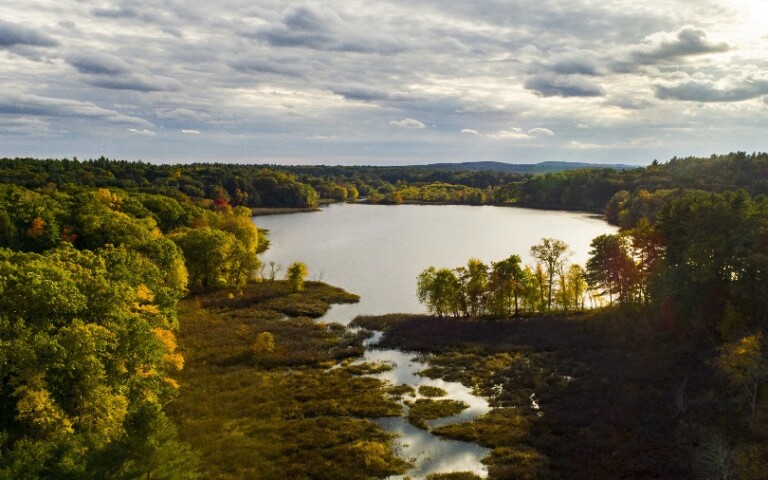
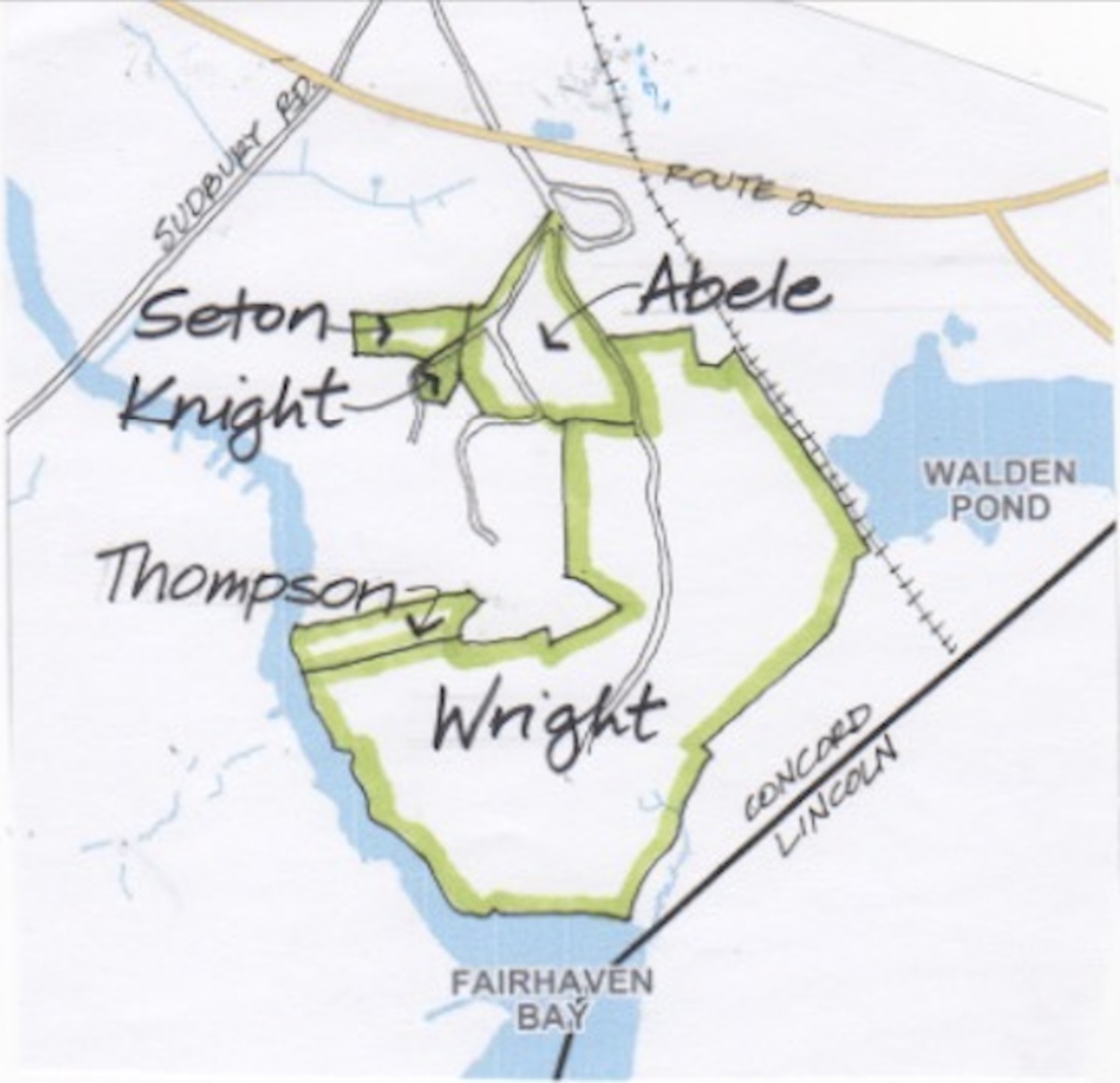
Among the first properties acquired by the Land Trust and still its largest holding, Wright Woods sits within 2,000 acres of protected and wooded open space. Initially consisting of gifts by Helen Robinson Wright beginning in 1959, the property has been augmented over the years by additional gifts in the Fairhaven Hill area from Henry Seton and his daughter Mary Seton Abele, Eric Parkman Smith, Mary S. Thompson, and Eunice Knight. Geographically, Wright Woods links Walden Pond Reservation with the Sudbury River, connects to a Town of Concord well site, and abuts land owned by the Walden Woods Project. For Thoreau, the area around Walden Pond and Fairhaven Hill was one of the “wild tracts” of Concord, a solitary and remote place of water and woodlands. Wright Woods retains much the same character today.
Trails: This is the Land Trust’s longest trail system, but can be broken down into shorter walks. Trails run through flat areas as well as some challenging terrain. There are wet areas and seasonal river flooding.
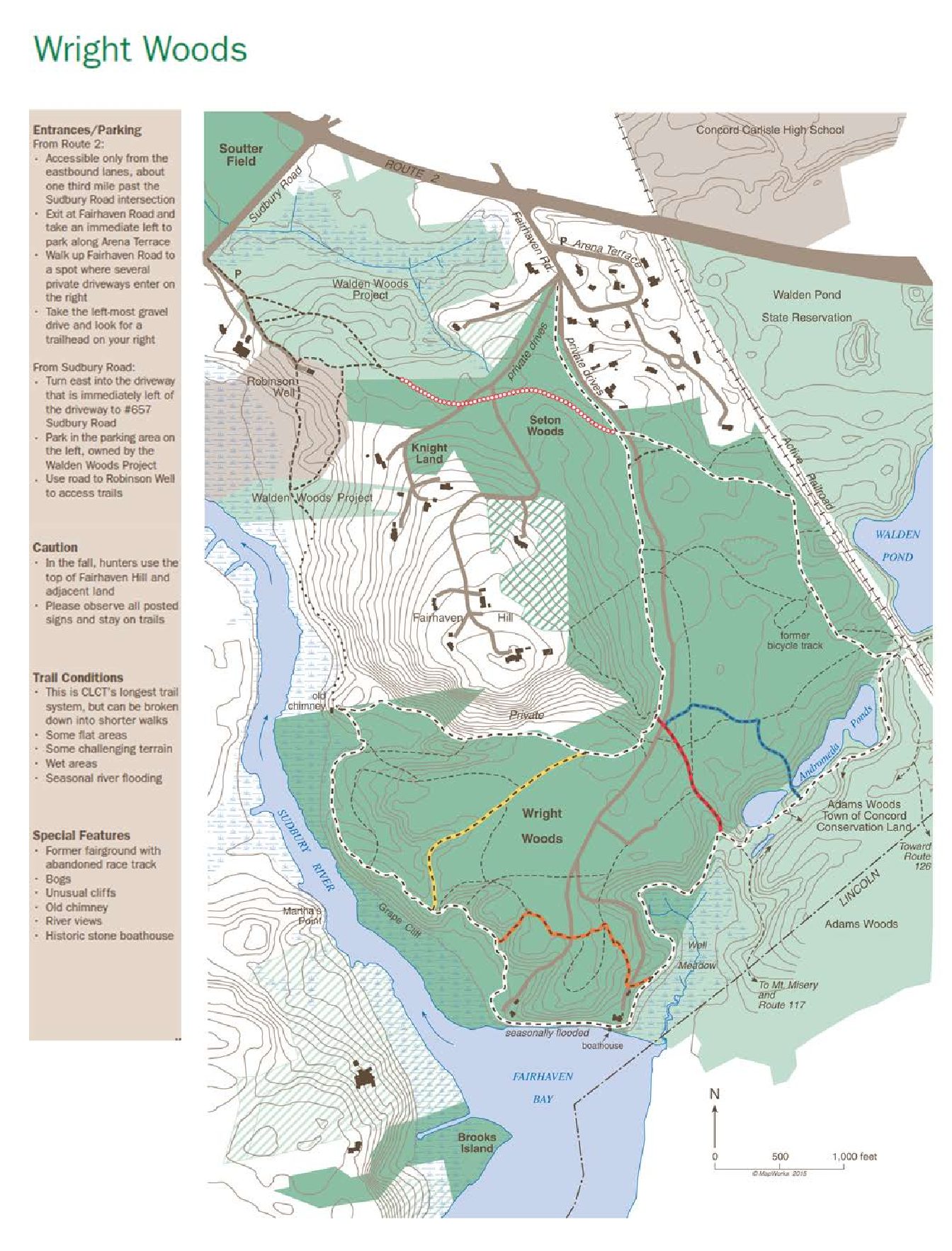
Entrances/Parking: From Route 2: Accessible only from the eastbound lanes, about one-third mile past the Sudbury Road intersection. Exit at Fairhaven Road and take an immediate left to park along Arena Terrace. After parking on Arena Terrace, walk up Fairhaven Road to a spot where three private driveways enter on the right. Take the center drive and look for a kiosk and trailhead on your left. From Sudbury Road: Turn east into the driveway that is immediately left of the driveway to #657 Sudbury Road. Park in the parking area on the left, owned by the Walden Woods Project. Use the road to Robinson Well to access trails.
Map Legend

Icons on the map can be clicked to get directions on Google Maps (works best for Parking Icons). Many Land Trust properties have trails that cross onto other land. Please stay on trails and abide by posted signs.
Explore the Land
Wright Woods is the Land Trust’s largest tract of land to explore, with a diverse and long trail system. The main loop trail is marked by white disks and connects to a larger trail network on lands owned by the Town, private property owners, the Walden Woods Project, and the Town of Lincoln. The white trail loop takes roughly 1.5-2 hours to complete. Towards the Sudbury River and Fairhaven Bay, the trail can be seasonally wet or flooded. The trail marked with orange disks provides a dry alternative and beautiful overlook on Fairhaven Bay. Listed below are unique aspects of Wright Woods along the main white loop trail, beginning at the trailhead by Arena Terrace.
Lake Walden: Walking clockwise from Arena Terrace, the white loop trail passes near the site of “Lake Walden.” In the late 1800s, thousands of tourists would flock to Walden Pond on the weekend to enjoy boating and carnival rides. Built by the Fitchburg Railroad to encourage ridership, the fairgrounds included a dancehall, dining hall, racetrack, and baseball field, along with a pedestrian bridge between the pond and the fairgrounds. After several major fires, the fairgrounds were finally torn down in 1901. Only granite piers and a cinder bicycle track survive today.
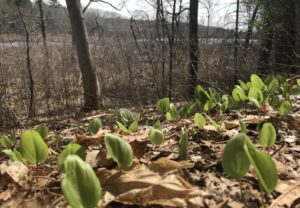
Andromeda Ponds: As you travel the white trail southeast, you will walk past Andromeda Ponds, a series of glacial kettle holes that have developed into bogs. Filled with leatherleaf (Chamaedaphne calyculata), cotton-grass, and other ericaceous plants, these ponds are especially beautiful in the fall. In the spring, peepers and wood frogs can be heard from the ponds during the breeding season.
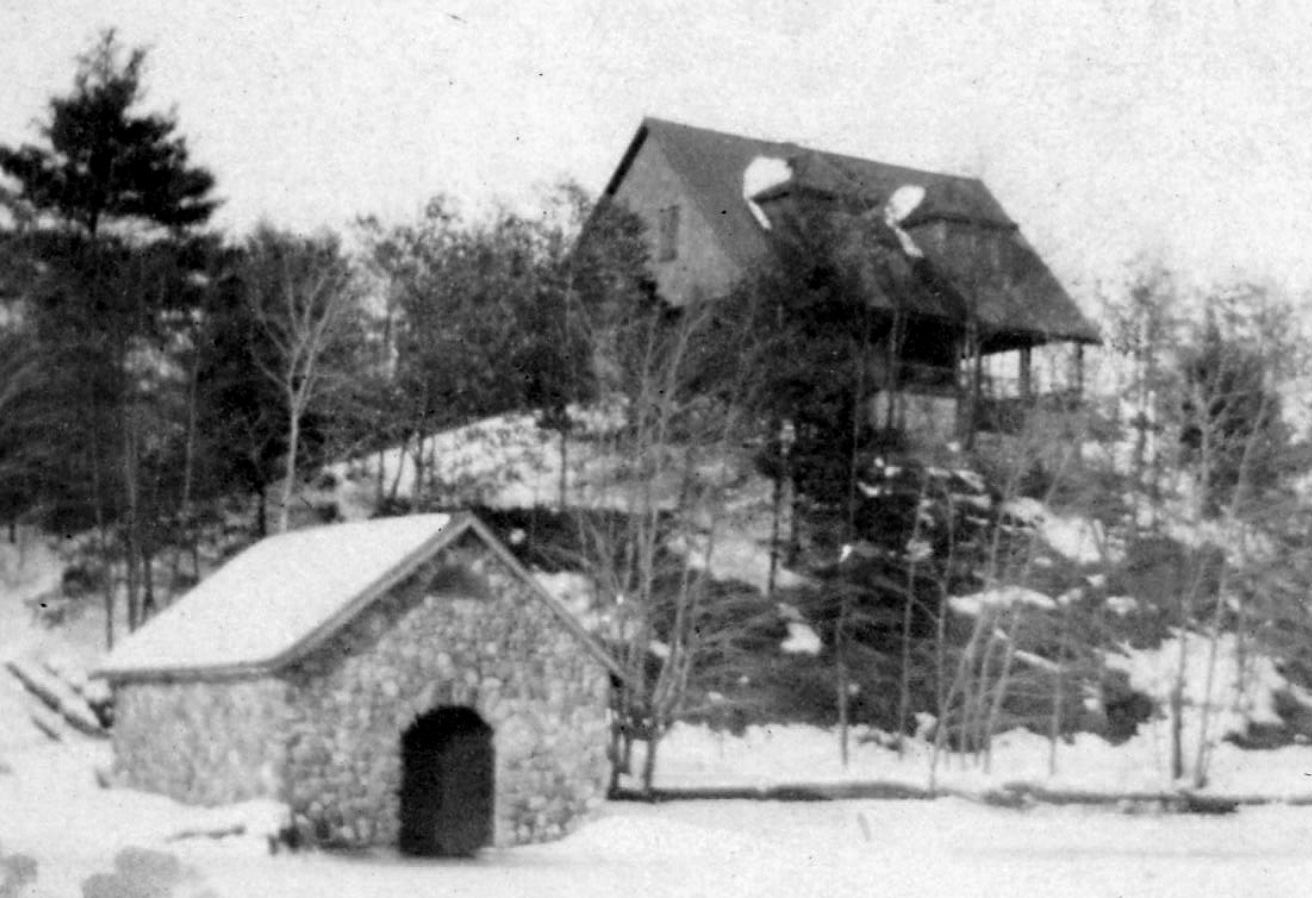
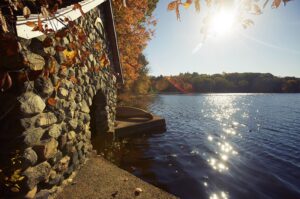
Stone Boathouse and Fairhaven Overlook: The boathouse can be found on the white trail along Fairhaven Bay, one of the most scenic trails in Concord. The boathouse was built in 1906 by the Robinson family, to serve their summer cottage on the bluff above. Canoes and rowboats were stored on platforms suspended along the interior walls and launched into the center when needed. Between 1959 and 1978, Helen Robinson Wright donated the boathouse, other buildings, and 240 acres to the Land Trust. At the stone boathouse, a path up the hill takes visitors to a kiosk and scenic overlook from a constructed terrace. This is now called the Fairhaven Overlook and marks what was once the summer home of Helen Robinson Wright. Just east of the Overlook is Well Meadow, a wetland with an area of wild rice growing at its mouth.
Grape Cliff: At the southwest edge of the property, the white trail runs by the top of a cliff that slopes towards the Sudbury River. Thoreau called this Grape Cliff. As you walk with the water on one side of you and the cliff on the other, views of the river and riparian wetlands can be seen within a canopy of hickory, birch, and five native oak species. At its highest point, the cliff consists of twenty or thirty feet of bare rock in a steep incline. Many of the exposed rocks are covered in lichens and mosses; woodferns spring from rock crevices.
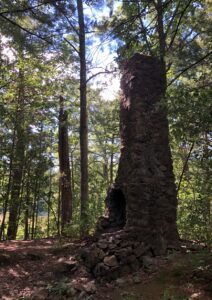
Old Chimney: At the westernmost point of the white loop trail, where it turns from the Sudbury River towards the base of Fairhaven Hill, is an old chimney that marks the site of one of the Robinson family summer homes. At this location, you can take the trail north towards the Walden Woods Project and its parking area off Sudbury Road. Some of the segments of this trail cross private property and are available through the generosity of the owners; please respect their privacy and stay on the trail.
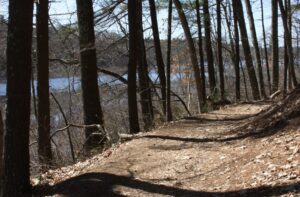
Forest Trail and Return to Arena Terrace: Away from the river and wetlands, the majority of the Wright Woods is characterized by flat and rolling terrain covered with an 80-90-year-old oak and white pine forest. This is the landscape through which the western segments of the white loop trail pass.
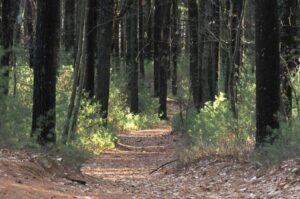
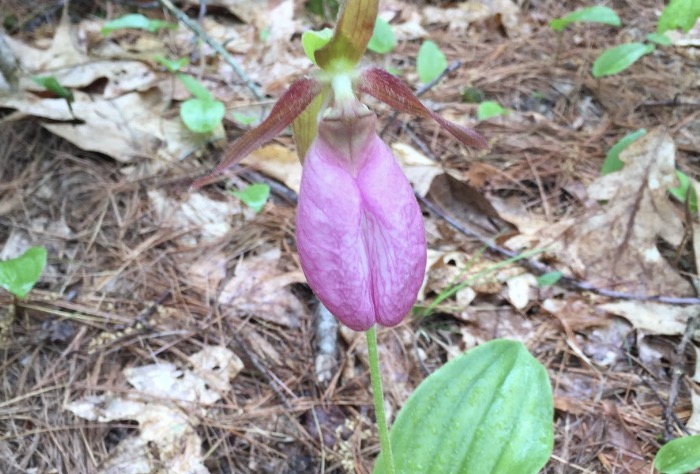
Wright Woods has been cleared for wood, burned by wildfires (a large one having occurred over 90 years ago), devastated by the 1938 hurricane, and overcome by gypsy moths in the 1930’s. Even Thoreau set fire to a large portion 1959-2014of the woods. But the upland forest grew to one dominated by red oaks and white pines, adapted to the arid, sandy, and gravelly soils here. Associated trees that can be observed include birch, hickory, and hemlock with an understory of lowbush blueberry and huckleberry, Pennsylvania sedge, lady-slippers, and princess pine, a type of tree club moss. The biggest threat today to the ecology of these woods is overbrowsing by deer, evidence of which can be seen in the absence of seedling and sapling trees and the lack of diversity of understory species.
At the end of the loop trail, you will pass through a 33-acre parcel that was donated by Mary Seton Abele, who lived on Fairhaven Hill for most of her childhood and wanted others to enjoy the open space she explored growing up. A side trail marked with bulls-eye disks connects through land donated by Mary’s father to the Walden Woods Project.
History of Preservation
Today, Wright Woods comprises over 230 acres of Helen’s land, as well as an additional 70 acres donated by Henry Seton and his daughter Mary Seton Abele, and property donated by Eric Parkman Smith, Mary S. Thompson, and Eunice Knight.
In 1991, Eric Parkman Smith donated his 10-acre parcel in the northern section of Wright Woods. One year later, Mary S. Thompson donated her 11.37 parcel to the Land Trust. Then, in 1994, Knight Land was donated by Eunice Knight. This parcel added 2.77 acres to the conserved land in this area.
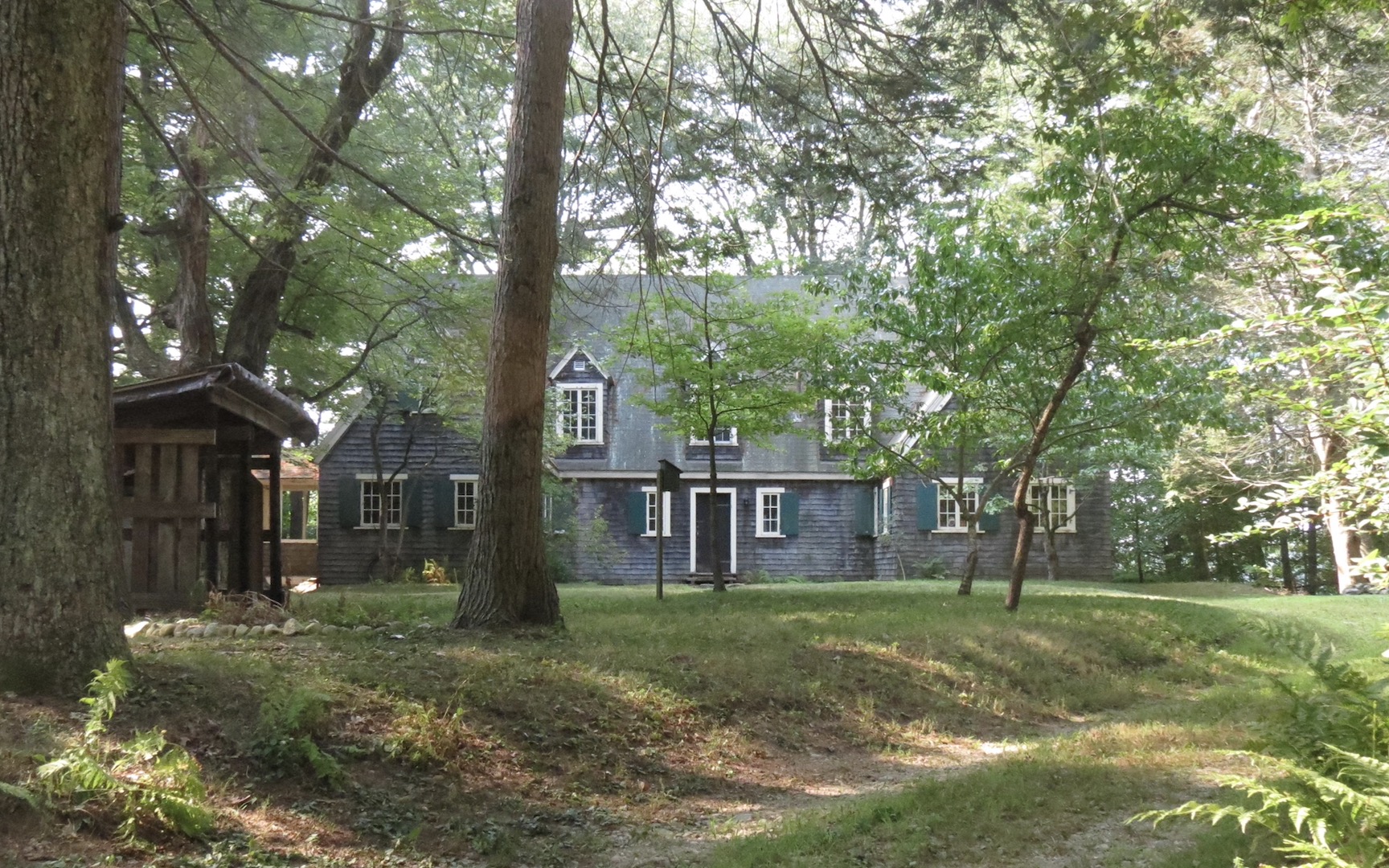
Seton Woods, a 38.7-acre parcel, was additionally donated by Mary Seton Abele in 2014. Mary lived in the house on Fairhaven Hill for many years and Mary’s father, Henry Seton, had donated an adjacent parcel of 6.98 acres much earlier in 1967.
Additional Images From Wright Woods