Corey-Bourquin Field
Year Acquired: Meadow in 1984, field in 2006
Size: 3.5 acre meadow, 25 acre field & woodlands
Miles of Trails: 0.75 mile loop trail
Features: Expansive views of hayfield, pine forest, small stream.
Overview
Corey-Bourquin Field and smaller Corey Meadow are an intrinsic part of the historic and agricultural landscape along Barrett’s Mill Road. Corey-Bourquin Field and woodlands provide a fitting backdrop to the Colonial-era houses within the Barrett Farm Historic District. Sisters Rosita Corey and Elizabeth Corey Bourquin owned this property and grew up in the adjacent farmhouse. Their mother donated the meadow across the street in 1984. Through the generosity of the sisters, the Land Trust was able to purchase the field and woodlands in 2006 at a price significantly lower than its assessed value.
Trails: Easy level walk, some wet areas.
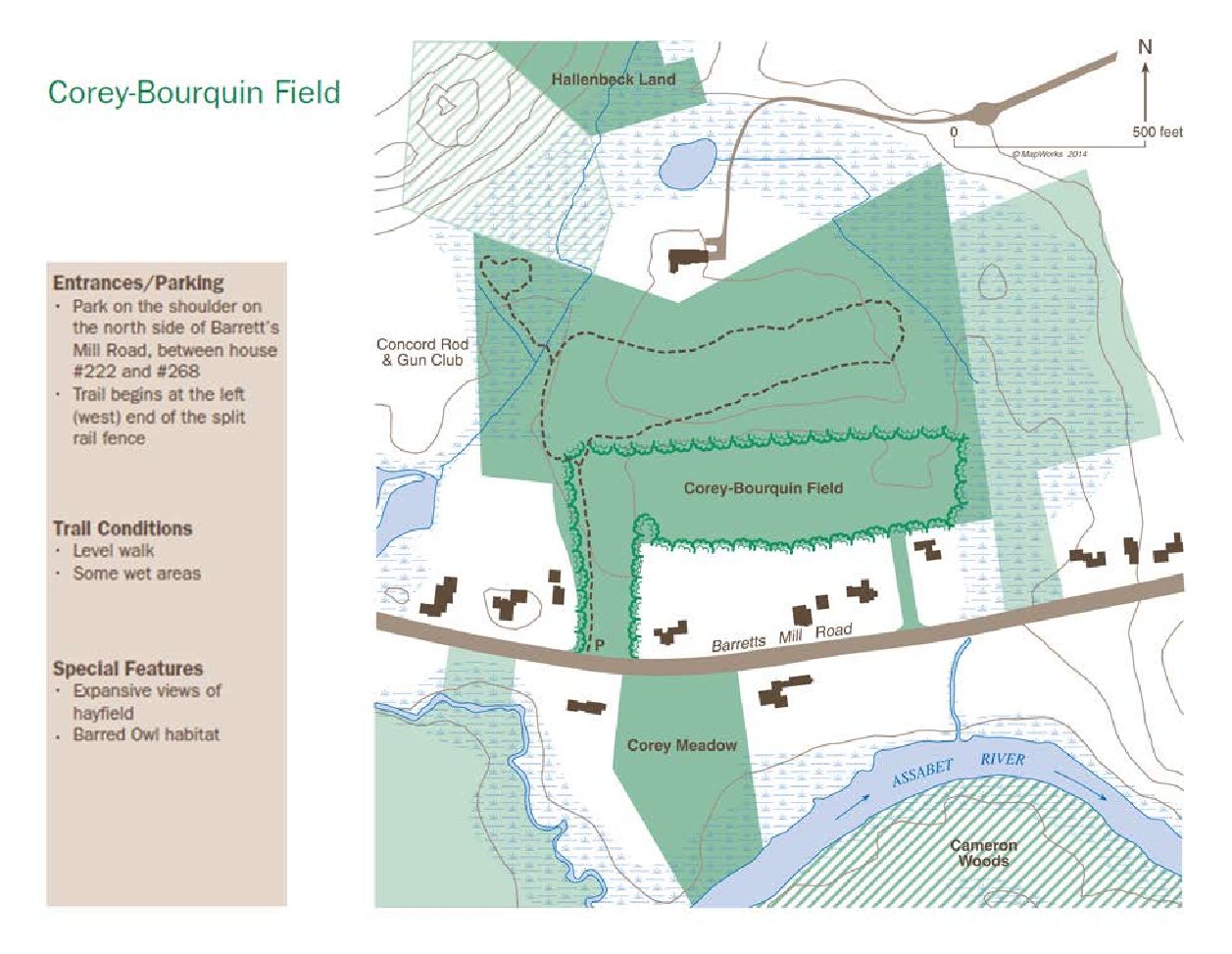
Entrances/Parking: Park on the shoulder on the north side of Barrett’s Mill Road between houses #222 and #268. The trailhead is located by the property sign and travels north into the woods.
Map Legend

Icons on the map can be clicked to get directions on Google Maps (works best for Parking Icons). Many Land Trust properties have trails that cross onto other land. Please stay on trails and abide by posted signs.
Explore the Land
Fields and Woodlands
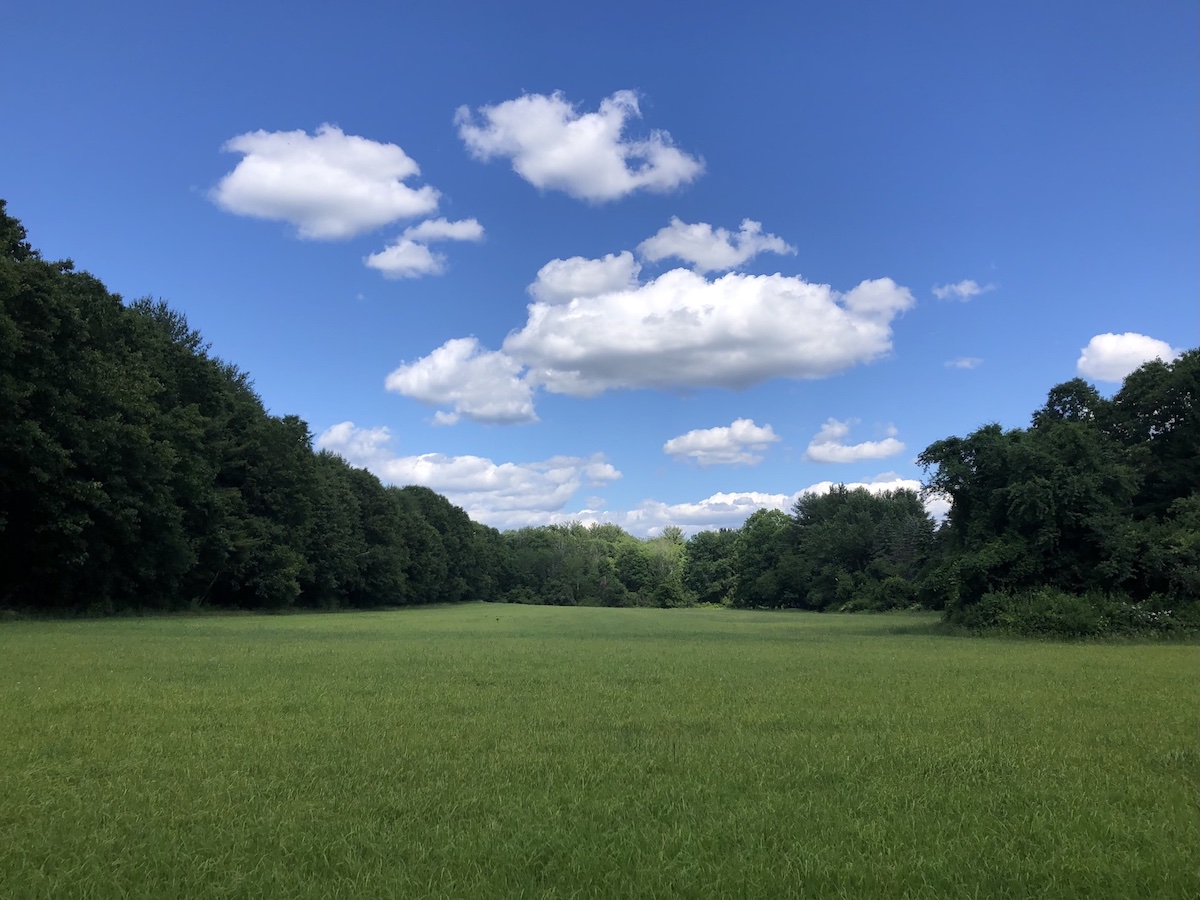
The trail begins at the west end of the fence at the parking area on Barrett’s Mill Road and travels along the active hay field that opens out behind the houses, providing a long vista to the east. The property also offers 15 acres of pine woods and red maple swamp. As one enters the woods and walks east, the trail parallels the field, passing through a second-growth pine woods. As it loops north, there is a hardwood red maple swamp on the right.
A side trail leads into the northwest corner of the property over a plank bridge, entering a seasonal wetland system. In spring, skunk cabbage appears in the wetter sections of the property. The side trail leads to a smaller loop trail, through ferns and spruce trees.
“Borrow pits” on the main trail are reminders of the agricultural use of the land. These pits were the source for sand and gravel used on the land. The trail along the side of the field running from Barrett’s Mill Road to the loop in the woods was built by students from the Fenn School in 2007 during their stewardship with the Land Trust.
Meadow
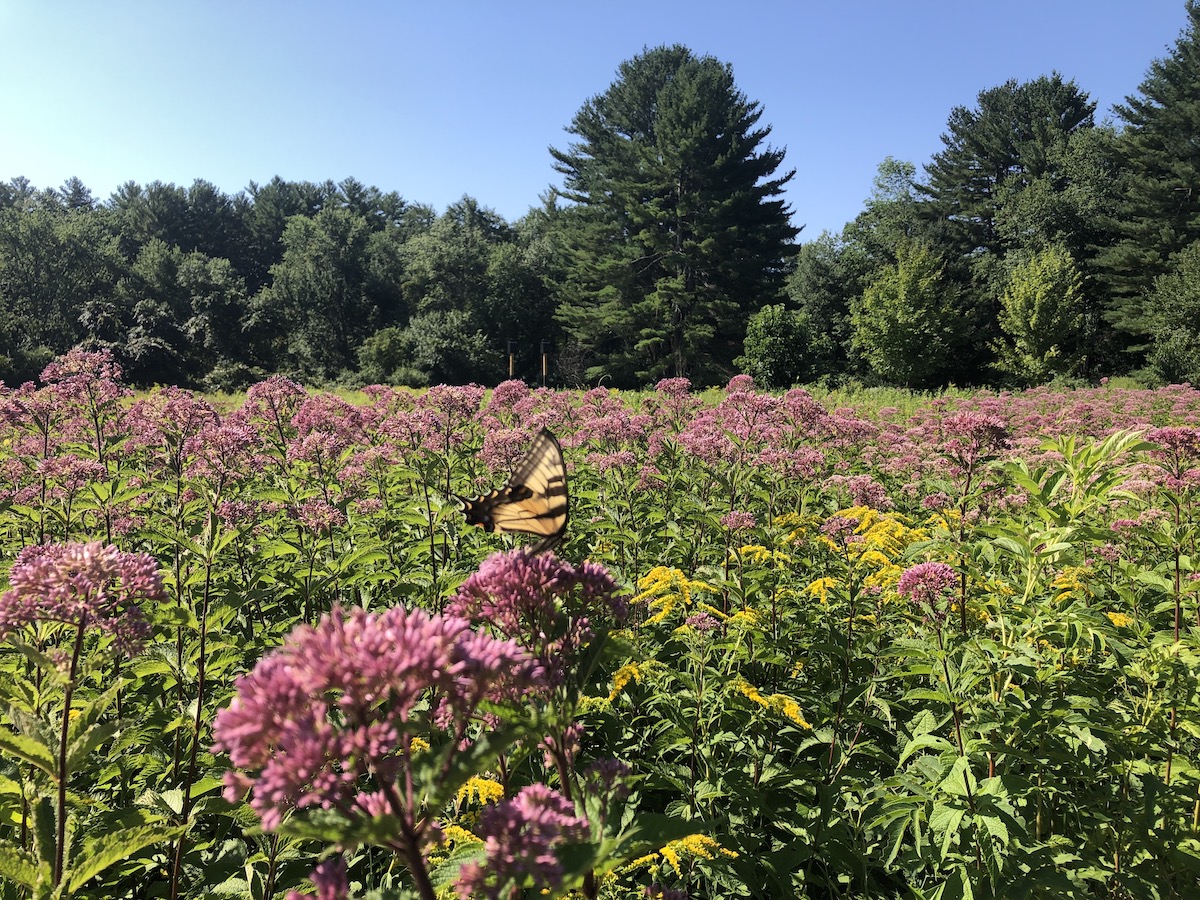
Corey Meadow lies opposite the Corey-Bourquin property on the south side of Barrett’s Mill Road. The property contains a wet swale and abuts the Assabet River, offering about 260 feet of river frontage. Near the river, the area is wetland and surrounded by swamp white oaks and pines. There is a small wooded patch before the river containing fruit-producing species and diverse animal habitat. The river access at the back of this property provides a corridor to wildlife. Corey Meadow is currently being monitored for its pollinator activity.
Directly across the street from Corey Meadow, the Land Trust also owns a very small parcel of land behind the stone wall that abuts Corey-Bourquin Field. This parcel is known as Rosie’s Garden.
History of Preservation
Rosita Corey and Elizabeth Corey Bourquin grew up in the historic house at 222 Barrett’s Mill Road and purchased much of the adjacent property in 1967 when it was threatened by development. When they generously offered the Land Trust the opportunity to purchase the land in 2006 at a price below its assessed value, neighbors and Land Trust members stepped forward to protect it. The 25-acre property includes a field that was once used to grow strawberries and asparagus; currently a local farmer uses the field to produce hay. Across the road is a lovely 3.5-acre meadow that was donated to the Land Trust by their mother, Dorothy Peters Corey, in 1984. It extends from Barrett’s Mill Road to the Assabet River.
Additionally, in 2020, Elizabeth Corey Bourquin donated a 0.5-acre parcel of land that abuts the field. This property connects to the field and Barrett’s Mill Road. The property is known as Rosie’s Garden because a neighbor currently keeps a small pollinator garden on the parcel.